One year ago, NEF launched the Strengthening the Resilience of Moroccan Communities project, funded by IDEA (Islamic Development & Empowerment in America), formerly IRUSA, to build on the recovery efforts initiated in the aftermath of the September 2023 earthquake.
While immediate humanitarian needs have largely been addressed, many households and businesses continue to face challenges rebuilding their livelihoods, homes, and economic opportunities. Working across the provinces of Al Haouz, Ouarzazate, Taroudant, and Chichaoua, the project supports communities through an integrated approach that combines assistance to enterprises and cooperatives, promotion of sustainable agricultural practices, and market-based shelter rehabilitation.
By strengthening livelihoods, improving resilience, and supporting local recovery efforts, the project aims to help earthquake-affected communities move beyond emergency response and towards sustainable, inclusive development.
One year into implementation, communities are beginning to see the benefits of these investments, with early results demonstrating how targeted support can help households and local economies recover, rebuild, and strengthen their resilience. The stories below highlight some of the project’s achievements to date.
Supporting Skilled Construction Workers and Safer Housing
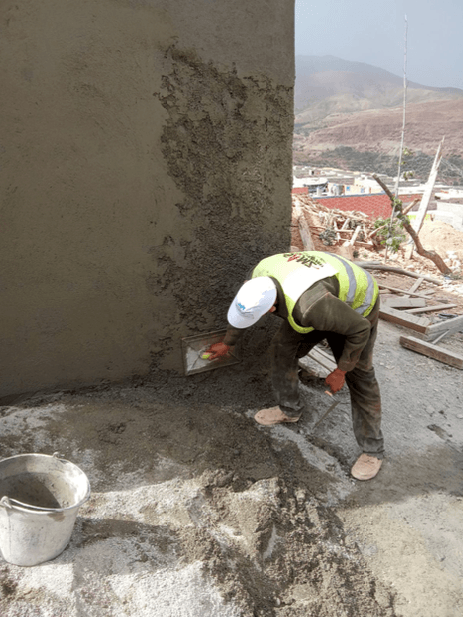
To support ongoing shelter rehabilitation efforts, NEF trained 45 construction workers in earthquake-resilient construction techniques and provided them with livelihood grants to purchase essential tools and equipment.
Idar, a 50-year-old construction worker from Chichaoua, explains: “The training on resilient construction techniques helped me improve my technical skills and the quality of my work. Four months after completing the training, I secured a construction contract with a company working in my village, creating a valuable new professional opportunity. The experience has allowed me to expand my business, increase my income, and create employment opportunities for others. Today, my revenue is three times higher than before the training.”
In parallel, the project provided shelter rehabilitation grants to vulnerable households, enabling them to finance priority repairs to their homes. Households were then linked with trained construction workers, creating a market-based approach to rehabilitation that supported both safer housing and local livelihood recovery.
Mohamed, a 67-year-old beneficiary from Al Haouz, shared: “The earthquake profoundly affected our family. We lost loved ones and our home, and for many months we lived in a tent. Thanks to the shelter rehabilitation grant, we were able to repair our house and make it safe again. We now have a home that protects us from the summer heat and winter cold.”
Community Solidarity Extends Support
An encouraging example emerged in Tighoula village, Chichaoua, where several beneficiary households expressed a desire to share part of their shelter grants with other vulnerable households, including relatives and neighbours. This exceptional initiative allowed assistance to reach an additional 16 vulnerable households while preserving the objectives of the original grants. As a result, a total of 136 households benefited from shelter rehabilitation support, exceeding the initial target of 120 households.
Supporting Local Businesses and Women’s Cooperatives
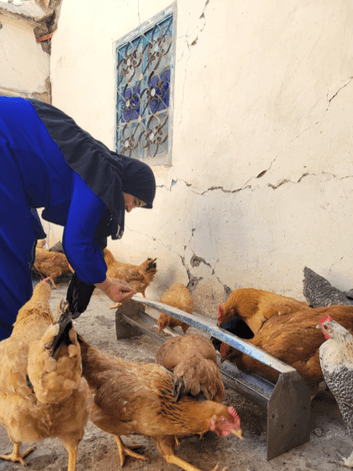
Alongside shelter rehabilitation, the project provides tailored business development support to small enterprises and women-led cooperatives to strengthen their resilience, growth, and long-term viability.
Fatima, President of a cooperative in Chichaoua and mother of two, explained: “NEF’s workshops, mentoring, and networking opportunities provided us with practical tools to strengthen our cooperative and develop our entrepreneurial skills. Although our cooperative was established in 2023, the earthquake delayed our formal registration. With support from NEF, we completed the necessary administrative procedures and formalized our operations. We also created social media pages and improved our marketing efforts. As a result, our weekly sales of couscous and zemita increased from around 10 kg to between 80 and 100 kg, significantly increasing our revenues and expanding our visibility through exhibitions and networking opportunities.”
Looking Ahead
As the project enters its second year, activities will continue to focus on strengthening community resilience and promoting sustainable recovery. This includes expanding support for climate-smart agricultural practices through local agricultural associations, strengthening local economic opportunities, and helping communities become better prepared for future shocks.
The project continues to support the transition towards sustainable, community-led development and resilience.
This project is being implemented with the generous support of IDEA. Any views expressed herein are solely those of Near East Foundation.